- Home
- Forums
- The Magic in Pixels - Disney Park Photos & More
- All Other Photos
- Non Disney Photos / Mobile Phone Photos
You are using an out of date browser. It may not display this or other websites correctly.
You should upgrade or use an alternative browser.
You should upgrade or use an alternative browser.
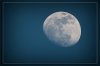
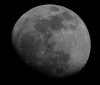
Tonight's Moon
- Thread starter Tim
- Start date



PolynesianMedic
Global Moderator
I can't for the life of me get anything close to any of these, no matter what settings I use. ; Great job guys!
yes John the 200-500
Jeff shoot in manual. I use ISO 100 and 100 at F11. ; I vary that depending on how much light is hitting the moon. Remember you are shooting sunlight reflected off the moon. I use the timer to avoid camera shake and you can always bracket too. also it is best to shoot with a partial moon as the shadow adds detail whereas a full moon is rather boring and lacks a lot detail in the craters
Jeff shoot in manual. I use ISO 100 and 100 at F11. ; I vary that depending on how much light is hitting the moon. Remember you are shooting sunlight reflected off the moon. I use the timer to avoid camera shake and you can always bracket too. also it is best to shoot with a partial moon as the shadow adds detail whereas a full moon is rather boring and lacks a lot detail in the craters
PolynesianMedic
Global Moderator
Yeah I have tried that, and I always get a white circle or semi-circle in the image. ; The moon is always blown out in my shots.
I shoot in manual Scott and make adjustments if needed.
here is one persons take on it
http://photographyblog.dallasnews.com/a ... -moon.html
here is one persons take on it
http://photographyblog.dallasnews.com/a ... -moon.html
PolynesianMedic
Global Moderator
Well, I will continue to work at it until I get it right.

Honestly it's pretty simple if you have enough zoom to make the moon large enough to cover the central metering area - switch to spot metering, it should perfectly meter the moon whether you're in P, A, or S mode, use the lowest ISO, lock exposure on the moon if you want to recompose at all, and shoot. ; Tripods and a timer are best, but it can be done handheld too if you are well steady. ; I shoot the moon a lot, and always have switched to spot meter for a quick and easy shot.


Scottwdw
Member
"zackiedawg" said:Honestly it's pretty simple if you have enough zoom to make the moon large enough to cover the central metering area - switch to spot metering, it should perfectly meter the moon whether you're in P, A, or S mode, use the lowest ISO, lock exposure on the moon if you want to recompose at all, and shoot. ; Tripods and a timer are best, but it can be done handheld too if you are well steady. ; I shoot the moon a lot, and always have switched to spot meter for a quick and easy shot.
This is what I was figuring to do. ; It is very similar when photographing a stage show when the characters are the only thing lit while the rest of the stage has dimmer (if not no) lighting.
Bingo. ; Same idea. ; You've essentially got a little pool of daylight in a dark surrounding. ; Unless your spot meter is too big to completely reside inside the moon's circle (also dependent on how much focal length you've got), it is actually fairly easy for a camera to meter and shoot. ; With a 500mm lens on a crop body, it's no problem at all to fill the spot meter. ; On full frame, it might get challenging below 400mm to fill the center metering spot. ; I've got big moon shots from 4 different cameras, ranging from 375mm equiv to 750mm equiv, and spot meter has worked every time.
Scottwdw
Member
The only lens I got is the 80-400VR. ; No crop with the FX body but I should be able to crop some later. ; The trick is finding a place with neat horizon features as the moon comes up. Haven't located anything great with the Light Trac app I am using. ; Man, I wish I was on the east coast tonight!